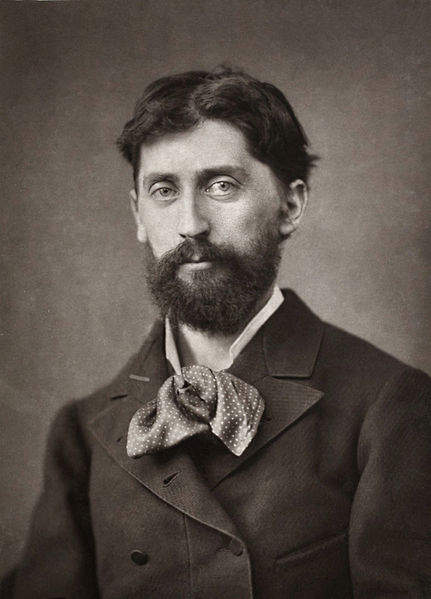
Bois-le-Roi as a village regroups around its centre the two hamlets of Brolles and Sermaize. It is situated in the Fontainebleau Forest for centuries part of the
Royal Domains. In the 19 century Parisian dwellers discovered and appreciated the natural beauty of the site and settled there.
The Second Empire (1852-1870) was a time of great prosperity and unprecedented economic dynamism in France. It fostered on the rise of a new Bourgeois class who emulated the Ancien Regime’s aristocratic way of life. This newly enriched upper class built themselves some fine houses in Paris, and becoming landed gentry they also built luxurious villas and châteaux in the country, where they adopted the princely and aristocratic ways and manners, in particular the hunt. The Fontainebleau Forest with its Royal past and centuries-old traditions in the equestrian arts and hunting was particularly prized. Besides it
also offered the added pleasures of racing at Sermaize where the racecourse had been inaugurated in 1776 by Louis XVI and Marie Antoinette, making it second in date to the Sablons at Neuilly-sur-Seine, near Paris.
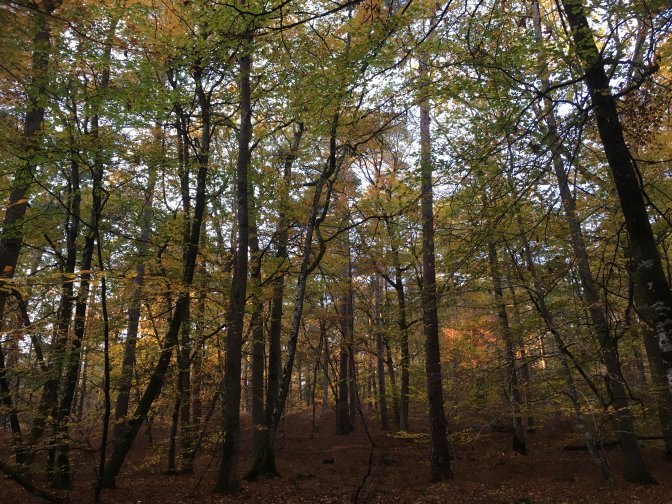
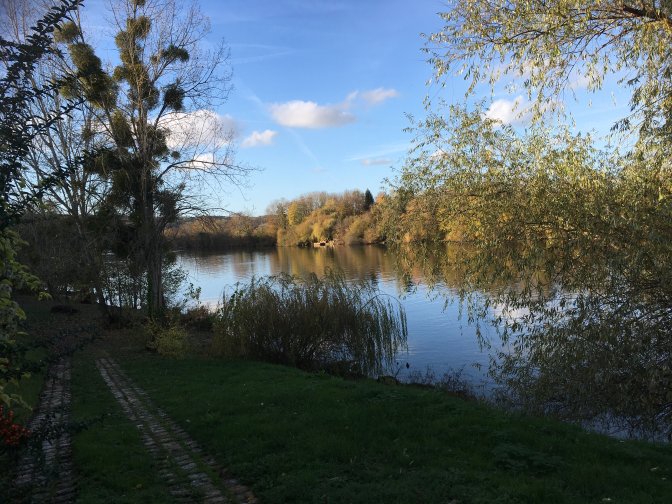
During this period the bed of the Seine had been deepened and enlarged and some locks created to facilitate its navigation and bring goods to the capital. At Bois-le-Roi the logs and sandstone from the Fontainebleau forest were routed through the port of La Cave toward Paris. Yachts were cruising on the river among barges, and the river became a waterway from Paris to the country for a wealthy financial and artistic elite.
In 1862, Abel Laurent, a foreign exchange broker at the Caisse des Dépôts in Paris, built at Brolles a château in the Louis XIII style on the site of ancient vineyards overlooking the Seine. He lived there
until 1900, when he sold it to Maurice Million d’Ailly de Verneuil, an honorary syndic of the foreign exchange brokers in Paris. The lord of the manor, his family and large staff lived in autarky on a vast
domain of 18 ha. The English-style park spread in soft slopes towards the banks of the Seine, a private chapel had been built further down, and the view extended beyond the river to Chartrettes, a vil‐
lage on the opposite bank. The outer buildings, the stables, the farm with its barns, the vegetable garden, orchard and meadows spread out along the old avenue de Melun, the actual avenue Alfred Roll.
Weekly hunting parties gathered in the main courtyard of the château some aristocrats, notables, commoners and Parisian writers such as the novelist Louis Noir.
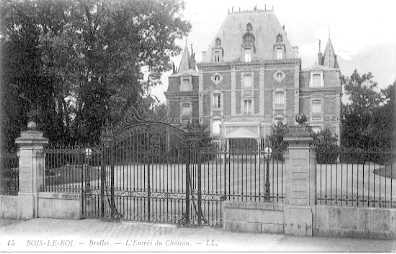
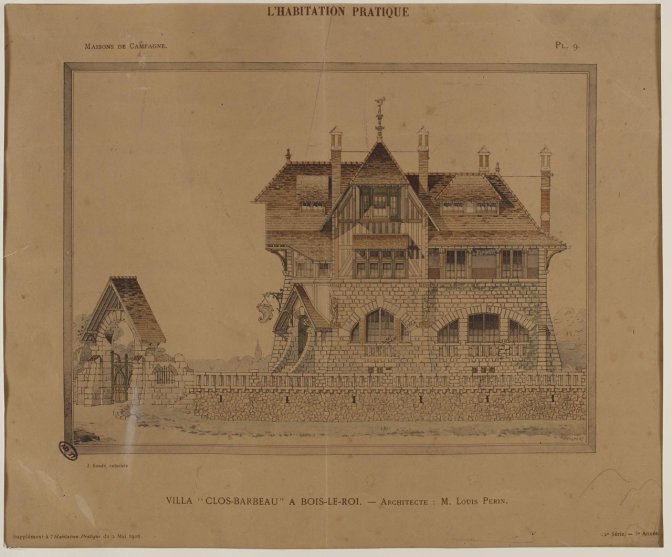
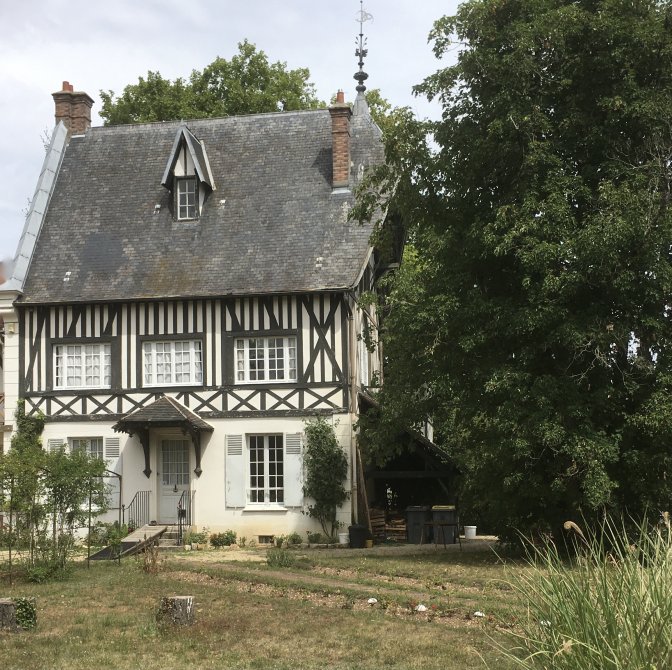
Périn (1870-1940), a young Parisian architect recently married to the daughter of the owners of the villa Chante Merle at Brolles, which he also renovated. In 1905 he built his own home, the Clos Bar‐
beau, a villa in an extravagant eclectic historical style on the banks of the Seine.
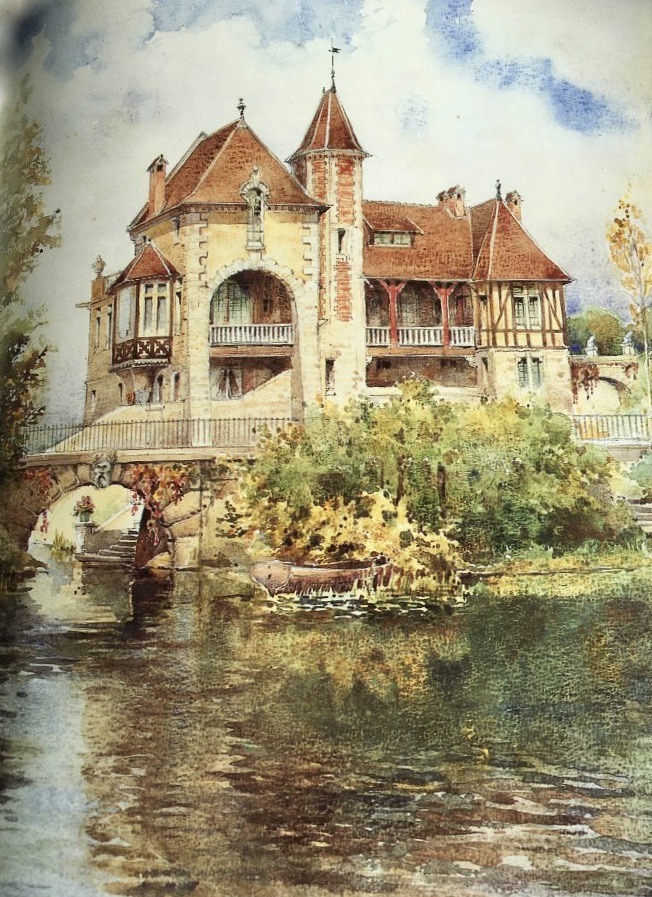
This villa looking like a fairy tale theatre set, was conceived as an artist and poet’s house, where the interior decoration echoes the style of the outer one, and where all the windows open onto the Seine,
which Périn depicted in numerous paintings and watercolours. He sold the Clos Barbeau en 1909 to the industrialist Louis Monin and built other villas at Bois-le-Roi setting up a fashion in the Seine val‐
ley. These pleasure villas called Les Affolantes were built for rich Parisian owners, keen on flamboyant and opulent surroundings. They also sought quiet surroundings, as they would come on their
yachts from the capital bringing victuals and domestics for often romantic and libertine sojourns. The capricious and frivolous spirit of the Belle Époque reigned at Bois-le-Roi in all its audacity and excesses. Thus, Émile Rochard, dramatist, poet and director of several Parisian theatres including the Châtelet, had the Gothic front of a house in Amiens dismantled in 1896 to have it rebuilt like a theatre
set Quai de la Ruelle at Brolles, at the Vieux Logis. In his villa 17 La Ruelle, he welcomed socialites and artists from the Tout-Paris, among them the Divine Sarah Bernhardt.
In 1932 Louis Périn built his last villa the Manoir de Seine, which became his last home, on the opposite bank of the river near the bridge at Chartrettes. It is a gracious and elegant building in an eclectic
Anglo-Normand and Venetian Renaissance style, imbued with a poetic and romantic charm conferred by its site. In Paris, his father had founded the Société d’archéologie de la montagne Sainte-Geneviève et ses abords. Louis Périn was also a member of the Commission Municipale du Vieux Paris, created in 1897 in order to preserve the Parisian architectural and archeological her‐
itage, he became its Vice-President en 1917. At Bois-le-Roi together with his father-in-law, Gaston Boutillier, he founded in 1910 l’Association des Riverains de la Seine in order to preserve the nat‐
ural beauty and architectural heritage of the site. Dominique Audemar, the husband of his grand-daughter Louise, is the present President.
En 1839 a former sergeant in the Napoleonic army, Claude François Denencourt posted at the Fontainebleau barracks, had revealed the romantic charm of the woodland forest of Fontainebleau in a guide book describing its paths and natural curiosities. It was the first edition of the Denencourt guides published until his death in 1875. His lyrical tone touched the heart and
imagination of the Romantic and Symbolist poets and writers, among which Théophile Gautier, Baudelaire, Lamartine, Georges Sand, Musset, Victor Hugo, Gérard de Nerval et le peintre Gustave Courbet, who paid him homage in a collective volume in 1855.
The arrival of the railway at Bois-le-Roi in 1848 had facilitated the access to the Forest of Fontainebleau and brought to the village some city-dwellers. They were attracted by the beauty of the place, a simple rural life less expensive that in Paris, and security far from the recurring political chaos of the capital. Fleeing from the hardships of the 1870 War, from the Siege of Paris and from the Commune, in 1871 a group of artists, writers, musicians and poets, including Louis Noir, Gustave Mathieu and Olivier Métra, settled in Bois-le-Roi at the suggestion of Louis Poupart-Davyl, so-called Louis Davyl (1835-1890), a playwright and novelist, who had been living there for some years. In 1865 the politician Gambetta had visited him and found himself under police surveillance because of his marked opposition to Napoleon III. Poupart-Davyl’s own gardener had turned police indicator for the occasion.Thus, was created The Group of Four, to become The Group of Five after the arrival of the painter Charles Castellani.
Louis Poupart-Davyl was at first a printer who published Victor Hugo. Then following a mystical crisis, he retired to the Trappe monastery, before becoming a writer and finding success with his play La Maîtresse légitime performed at the Odéon theatre. His freedom of speech and manners, his activist stance in Parisian political and literary clubs, were akin to the attitude of the poet and songwriter Gustave Mathieu. Mathieu was one of his friends and both men were close to Jules Vallés, a journalist, writer and politician who fought fiercely for freedom of the press. He was one of the founders of Le Cri du peuple, a daily paper violently critical of Adolphe Thiers’s politics, published from February 22 to 12 March 1871, before being banned from March 21 till May 23 1871.
Vallès was elected by the Paris Commune, then condemned to death for his political activism he went into exile in London until 1880. This small conspiratorial group of friends shared the same literary, social and political convictions. They used to gather for noisy and animated meetings in Poupart-Davyl’s Parisian flat or at his house in Boid-le-Roi they had nicknamed, Le Château de la Médisance, The Chateau of Slander.
The novelist Louis Noir (1837-1903) had joined the Zouaves regiment as a young man, an experience he recounted in a book, Les Mémoires d’un Zouave During the Paris siege in 1866, he commanded a
regiment of irregular soldiers and became Colonel in the Garde Nationale after Napoléon III’s fall. The Emperor’s cousin, Prince Pierre Napoléon, killed its seems by mistake Louis Noir’s brother Victor, when the latter as a go-between in a duel between political adversaries on the 10 of January 1870.
This incident took on a potent symbolic value for Louis Noir, and meant for him an increased political engagement, he then became editor-in-chief of the anarchist Republican daily paper Le Journal du
Peuple published from July till September 1870. In Bois-le-Roi he wrote articles for the press, historical and adventure militarist novels based on his own life and marked by violence, which he published
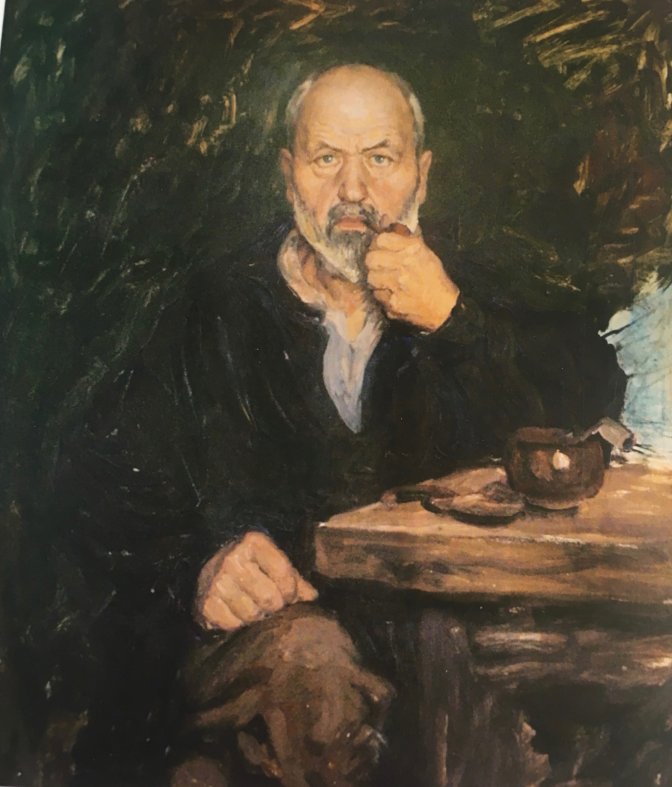
as series in various newspapers. The Mairie of Bois-le-Roi owns a portrait painted by his artist son, Robert Noir, exhibited at the 1886 Salon.
Louis Noir had been the Lieutenant Colonel of an irregular soldier, an artist of Italian origins born in Brussels, Charles Castellani-Leonzi (1838-1913). When he was freed from detention in 1873, Louis
Noir invited him at Bois-le-Roi where he settled at the edge of the forest. Castellani recounted his stay in his memoirs, Les Confidences d’un panoramiste, Aventures et Souvenirs, 1899, writing a chronicle
of the happy and boisterous Bohemian life led by the small artists’ colony. « In this small place I truly rested and I lived nearly happily during several years although I was very poor. We were a colony of
artists and literati all more or less equal in fortune, but all equally high-spirited, full of life and hope.
We lived there filled with courage; it was nearly a family and the members with all their faults and differences gave each other moral support… Louis Noir, Poupart d’Avyl, Olivier Métra et Gustave Mathieu, the painters Dufour, Lafitte, Adrien Moreau… We built up countless grand plans, had so many festive celebrations in the barn I used as a studio, enjoyed so many gargantuan feasts on tables made out of
planks and barrels! And also our walks between Barbizon, Fontainebleau, Melun and Bois-le-Roi beneath the great vaults of the forest, by day or by night in the moonlight, with around us the cries of the owls and the stags’ bellows… No, I shall never see this again, and besides Bois-le-Roi was a hotbed of revolutionary propaganda, a factory of subversive theory: all governments were threatened and knocked down…This is to show the spirit of this happy company, which nevertheless had some difficulty in coexisting peacefully. »
Castellani had two art teachers the first one was Jules-Élie Delaunay (1828-1891), a portraitist and muralist whose works decorated the walls of the Opéra Garnier, the Hôtel de Ville in Paris and the
Pantheon, he gave him the taste for large compositions. The second was Adolphe Yvon (1817-1893) a history painter who favoured the study from nature and gave his pupil the taste for battle scenes. At
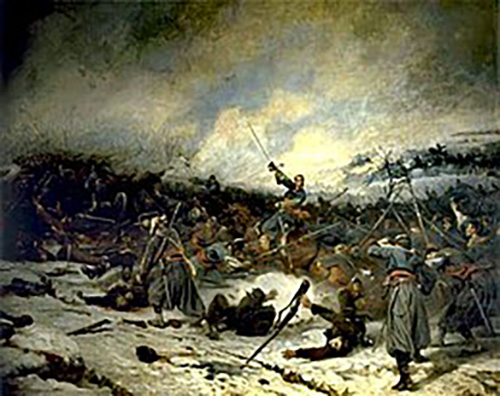
Bois-le-Roi Castellani worked on large history paintings, which made him known such as Les Cuirassiers à Sedan, 1874. In this work he followed his master Adolphe Yvon’s teaching and with the
support of the Mayor of Samois, a village near Bois-le-Roi, he convinced the Colonel of the 1 Régient des Cuirassiers in garrison at Melun to allow his men to model for him. The painting was exhibit‐
ed at the Salon and bought by the State, it is now in the Lycée Militaire in Autun. The large canvas La Charge des Zouaves Pontificaux à Loigny, realized in 1879, is a good example of the panoramic
scenes the artist painted from 1875 onwards. They brought him fame and success from France to Brussels and Philadelphia, where he painted the cupola in the Palace of Industry.
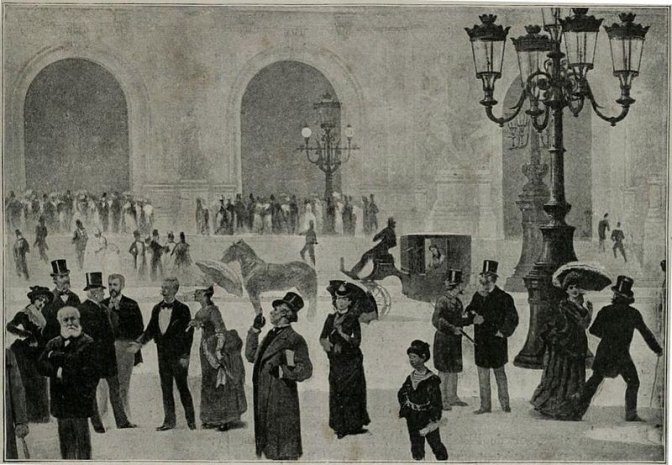
The concept of panorama was invented in England in the 18 century and remained popular until the beginning of the 20 century when the rise of the cinema brought its demise. It consisted in a 360° composition to be exhibited in a rotunda giving the spectator the illusion of reality through its perspective and trompe-l’œil effects. Castellani’s last panorama, Le Tout Paris, was exhibited at the 1889 Exposition Universelle. It created a furore in showing the General Boulanger who had taken part in the crushing of the Commune in 1870. On becoming War Minister in 1886 his political ambitions had rocked the Third Republic, so his image had to be deleted. This epic representation of the Parisian Belle Époque society included among its 1 200 characters the novelist Alexandre Dumas, the composer Charles Gounod and Castellani himself. Their number and diversity were much admired, yet some Parisian socialites were resentful as they felt that they had not been given the prominent place they thought was rightfully theirs.
Castellani was a multi-talented man and an adventurer like Louis Noir. In 1894 the paper the Quotidien Illustré commissioned him to take part in a balloon expedition in Norway in order to report on the Maelström, a whirlpool Edgar Alan Poe and Jules Verne also studied.
In 1895 the magazine L’Illustration similarly commissioned him to join the Mission Marchand, and record his trip up the Oubangui river in the Congo, to be published as a series in 1898. His African
adventures were at the source of several books he wrote back in Bois-le-Roi from 1906 onwards. The volume Marchand l’africain contains some illustrations from the author, photographs, maps and the
score and words of two songs written by Castellani: Valmy, Chant des Volontaires and La Marche des Sénégalais, dedicated to Colonel Marchand, ami et compagnon, Colonel Marchand, friend and companion. Still politically engaged Castellani dedicated a volume in 1904 Entre Moloch et Satan, À Paul Déroulède, the poet, author and politician: « And at the same time I have to make this criticism, you
are my dear Déroulède, too generous, too heroic for our time; or else you should have been born with the Boers. »
He also showed his versatility in writing a tragedy in verse on Vercingétorix in 1908, and in 1915 in a book on health illustrated with photographs of himself. In it he praised the benefits of a simple life and vegetarianism, then fashionable in social circles: To say young, « To keep one’s youth, in life the only richness, One must use all and abuse of nothing.»
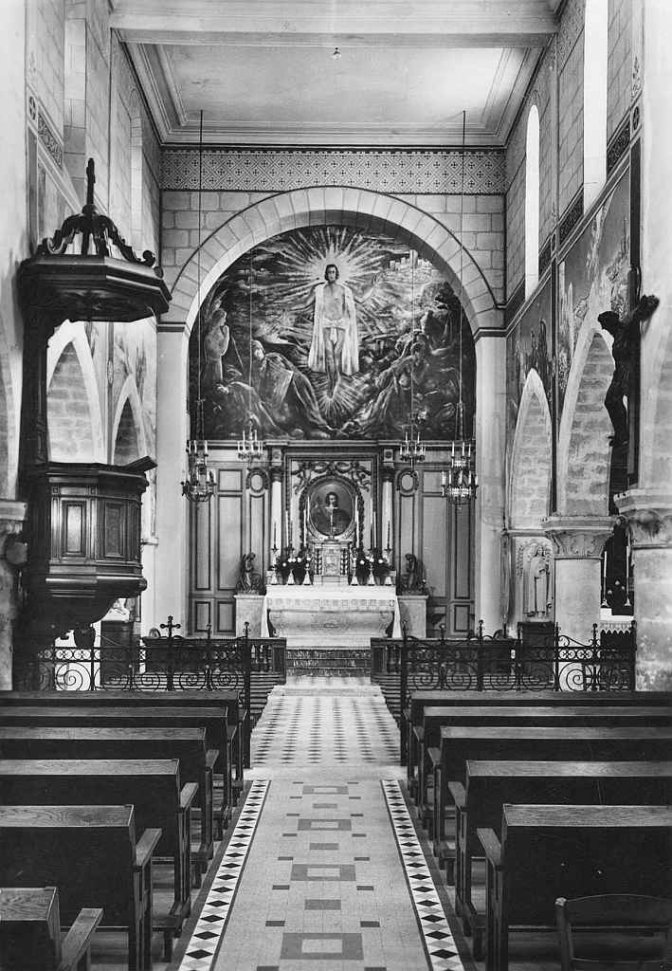
In 1912 he decorated the choir in the Bois-le-Roi church with some mural paintings of the life of Jesus. The red colour of the vexillum held by the resurrected Christ above the altar created a furore
from the parishioners who saw ii as a mark of his sympathy towards the Commune.
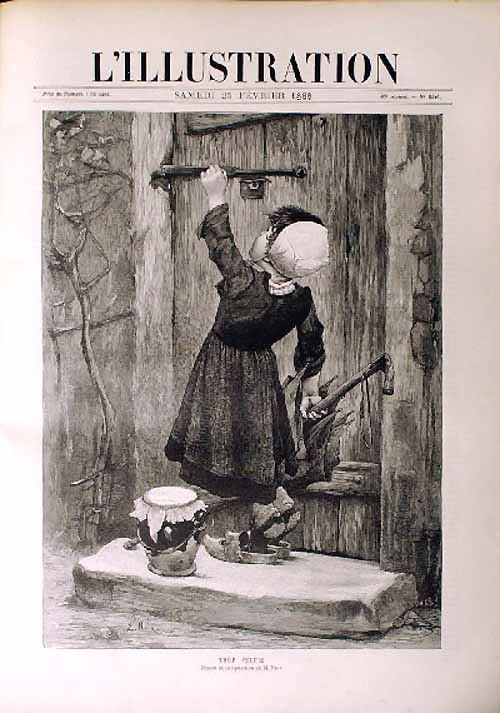
Castellani was responsible for the artistic vocation of the son of his friend Louis Noir, the en Name of Louis-Étienne Salmon (1837-1903), Ernest Salmon (1864-1931), who in 1912 took on the name of Robert Noir, He taught him painting and introduced him to his former master Adolphe Yvon. Robert Noir painted military and genre scenes in a realist style finding inspiration in the rural life of the peasantry at Bois-le-Roi. His father’s portrait, Louis Noir, in the Town Hall, was exhibited at the 1886 Salon, shows the importance of the Dutch school of painting on his art. He became known to the public through the reproduction of his painting Trop petite on the cover of the magazine L’Illustration on 25 February 1889.
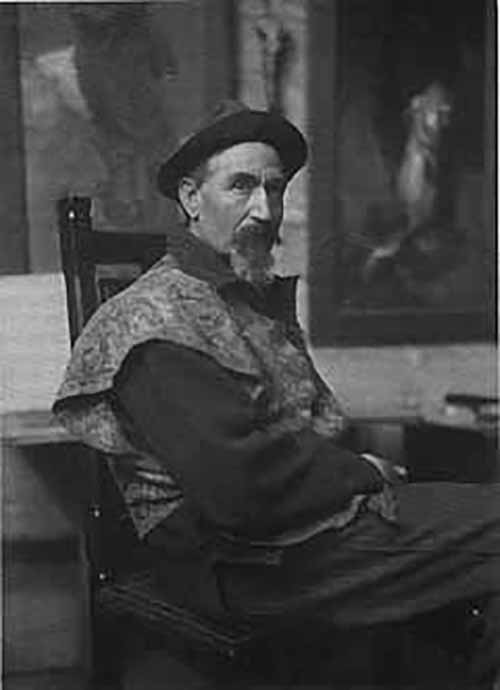
From his first painting in 1884 Intérieur, he had shown his taste for Dutch genre painting, and at his return from a stay in Holland from 1891 till 1896, he had himself photographed in the manner of a Vermeer painting in his Bois-le-Roi studio, dressed up in a 17 century costume. He built up his reputation on rural genre scenes close in spirit to the art of Aimé Perre or Millet, but imbued with a singular pathos and miserabilism all of his own. From 1897 onwards his last manner is very similar in style and subject to those of Alexandre Steinlen (1859-1923), the Swiss painter, sculptor and illustrator, member of the Bohème in Montmartre, friend of Toulouse-Lautrec, who made him participate to the Salon des Humoristes in 1912.
Noir suffered from melancholia and was haunted by the violent death of his uncle Victor Noir. His father had developed a macabre cult to his memory, and kept his brother’s skull as a memento mori. Robert Noir committed uicide in the Bois de Boulogne in 1931.
In 1903 after his father’s death, Robert Noir had set up a studio in the family home in Bois-le-Roi. However, feeling himself isolated in this peasant society he pressed his friend the
painter Louis de Monard (1873-1939), who became an animal sculptor under his influence, to come and join him.
The latter came from a military family in Autun and had met Robert Noir through the Parisian literary and artistic circles they both moved in, among which the cabarets of the Chat Noir and Quat’z’Arts in
Montmartre.
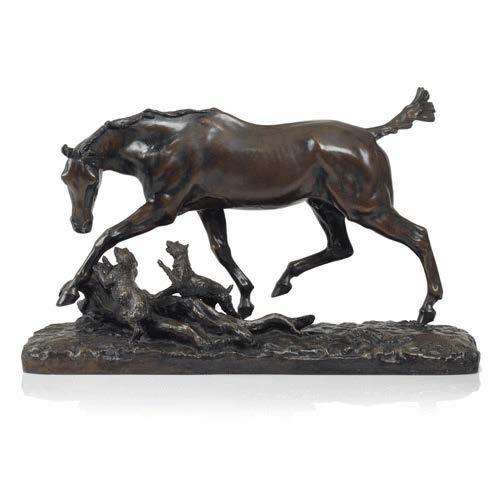
Louis de Monard loved animal life and found in the Fontainebleau Forest some familiar subjects to feed his creativity. In Bois-le-Roi he and his wife led a simple and industrious life, setting up a vast studio and breeding horses, goats and vultures. The latter inspired him a large decorative cup, one version is in the Musée d’Orsay, another one was placed on his tomb in Bois-le-Roi cemetery and has since disappeared. He became a member of the Artistes Français and of the Société Nationale des Beaux Arts, and his passion brought him a great deal of commissions. In 1905 he exhibited at the yearly event of the
Peintres et Sculpteurs de Chasse et de Vénerie at the Orangerie des Tuileries, as well as at the Exposition Canine. Dogs became a favourite subject he used to study at the return of the hunt with the hounds of the Lebaudy hunting company in the Forêt of Fontainebleau.
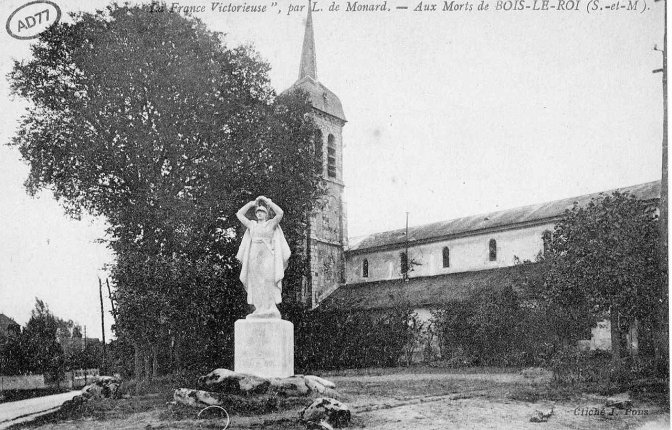
In Bois-le-Roi he carved in 1921 La France Victorieuse to adorn the Monument to the Dead near the Saint Pierre’s church, set in a garden named Square
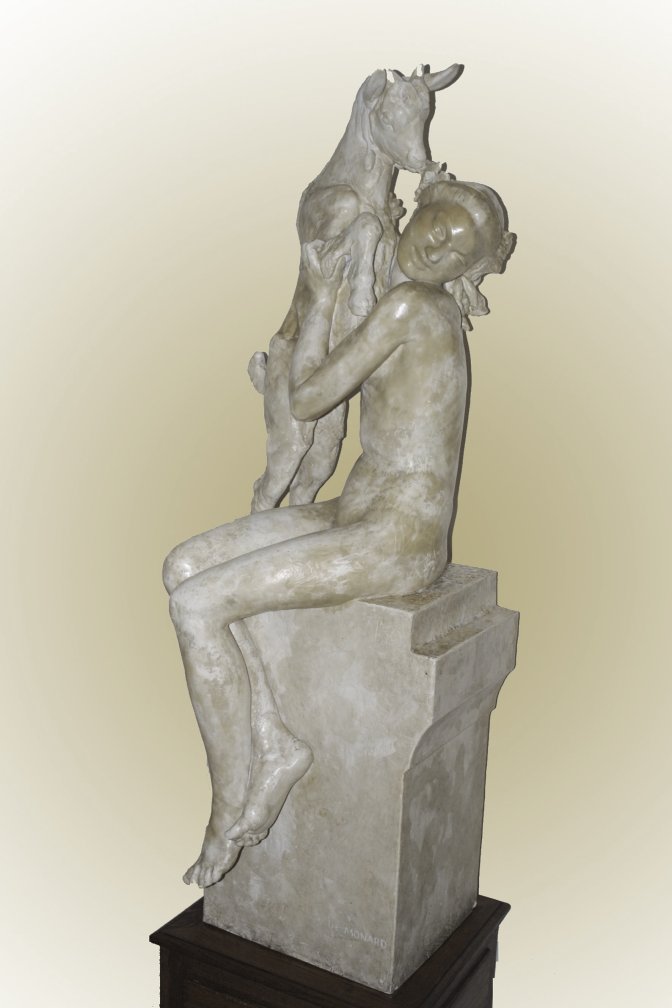
Louis de Monard. The Mairie, owns among several other pieces, an enchanting marble group inspired by Classical Archaic Greek art, La Jeune Fille au
Chevreau, 1924.
Gustave Mathieu (1808-1877) was the eldest of the Groupe des Quatre, those four Parisian friends
who found a safe haven in Bois-le-Roi in 1871, away from the political havoc and violence during the
Commune in Paris. The fifth one was Charles Castellani who joined them later. Mathieu was a fierce
Republican who had taken part on the barricades in the Révolution de Février in 1848. He was a po‐
litically engaged poet and songwriter whose satirical verses often used the double-entendre in order
to avoid censorship. At the beginning of the Second Empire he has opened in Paris a cabaret to the
sign of Jean Raisin, which he celebrated in a song, Jean Raisin le Triomphe du vin. In this place his
friends from political and literary circles, such as Charles Baudelaire, Alphonse Daudet, Jules Vallès
and Gambetta, used to gather and make merry. In 1864 he created L’Almanach de Jean Raisin, re‐
vue joyeuse et vinicole, a merry and vinicultural review to celebrate his vineyard in the Nivernais, the
Clos-Pessin, whose production he drank with passionate delight. In 1886 his friend Jules Vallès, de‐
scribed him in his novel, L’Insurgé -1871.
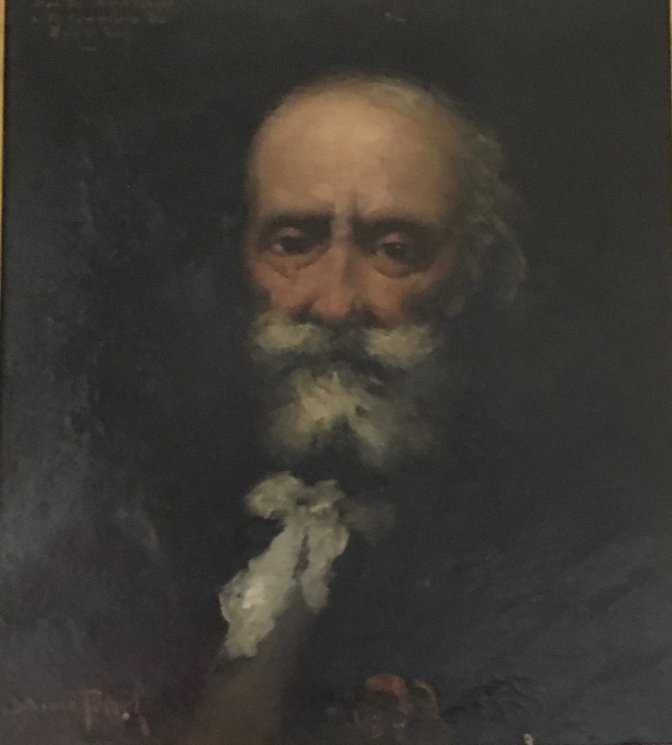
The Mairie of Bois-le-Roi owns the portrait of
Gustave Mathieu by Aimé Perret, c.1875-6.
Gustave Courbet had also depicted him in
1869, a flower at the buttonhole, as mentioned
by the writer and storyteller, Armand Silvestre
: ’A grey hat tipped on the ear; with ever twin‐
kling eyes; a white beard and flower to the
buttonhole; Gustave Mathieu is a songwriter
who had made of Bois le Roi his elective
home. He was with Charles Monselet and
Olivier Métra, one of the passionate lovers of
this lovely village on the edge of the Forest of Fontainebleau.’
In 1873 the Marquess of Hertford’s natural son, Sir Richard Wallace (1818-1890), the great art collec‐
tor, politician and philanthropist who endowed Paris the same year with the famous Fontaines Wal‐
lace, some Neo-Classical aediculas adorned with caryatids representing the Three Graces, had Gus‐
tave Mathieu’s works published in a volume Parfums, chants et couleurs. Richard Wallace had shown
great generosity and philanthropy during the Siege of Paris, Thiers decorated him with the Légion
d’Honneur and Queen Victoria ennobled him for his charitable work. His magnificent collection of
French art gathered in his home of Bagatelle in the Bois de Boulogne, is now a museum in London,
the Wallace Collection. Richard Wallace was also a lover of poetry and literature. For a while he attended the meetings of the Bohemian literary group who
gathered at the hôtel de Pimodan, the actual hôtel de Lauzun on the Île de la Cité in Paris. Among them were Théophile Gautier and Baudelaire, both mem‐
bers of the Club des Haschischins created in 1844 in the same place by Georges Moreau de Tours’s father, Dr. Jacques-Joseph Moreau de Tours.
In Bois-le-Roi literature was to the fore when Louis Létang (1855-1938), born in the village, became
Mayor from 1892 till 1908. He was a novelist and journalist, named editor in chief of the Nouvelliste
de Seine-et-Marne a publication in Melun. In his numerous popular novels he knew according to a
contemporary critic how to « … mix with an incomparable insight idealism and reality, and cast the
fanciful aspect of imagination in life’s picturesque colours… », they were published as series in vari‐
ous newspapers.
He was decorated with the Croix de Guerre for his military action in the First World War. As Mayor he
did much for Bois-le-Roi bringing electricity to the village, and became Officier de la Légion d’Honneur
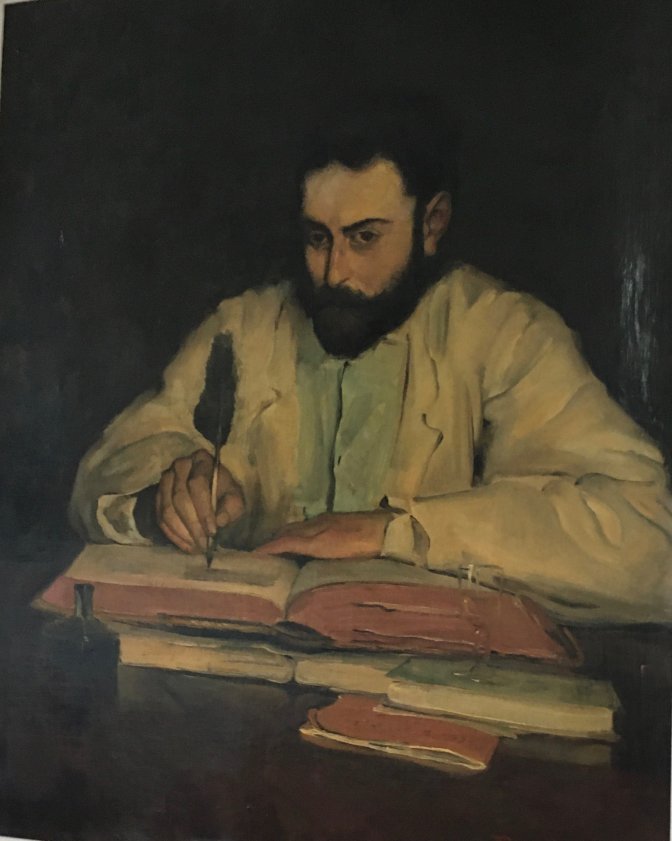
in 1923. The painter Joseph Bail (1862-1921) made his portrait in 1890, now at the Mairie, and
Georges Moreau de Tours dedicated him his sketch of Henrich Heine, also at the Mairie of Bois-le-
Roi, drawn for the painting Henrich Heine et la Muse de la Poésie in 1894. Louis Létang had asked
the Bois-le-Roi artists to give one of their work to the Mairie, no doubt in emulation of Charles More‐
au-Vauthier (1857-1924), painter and author, who in 1907 created in Bourron-Marlotte, a village in the
Fontainebleau region Le Petit Musée de la Mairie, exhibiting works from the artists living there,
During the 19 the Dutch school of painting of the 17 century, The Golden Age of the Protestant
United Provinces of the Netherlands, influenced French artists. It carried on the realist tradition of
Flemish Primitive art, and found an echo with some Romantic painters, such as Delacroix. In this he
was influenced by John Constable, who himself emulated Dutch Masters. A return to nature was un‐
der way, facilitated by the arrival of the railway. The Barbizon School in the Fontainebleau Forest was
its first manifestation, preceding the Impressionists. The Second Empire bourgeois French society
appreciated the art of the Dutch Protestant 17 century bourgeois society which favoured landscapes, seascapes, still lives, genre scenes and portraits in‐
stead of the large Baroque historical or allegorical paintings of Catholic Flanders. These paintings are often on a small scale and the portraits are in bust as
in the Renaissance. They had already been appreciated by princely and aristocratic collectors in the past, and Louis XIV himself owned many of them in his
Cabinet de Peintures now in the Louvre Museum.
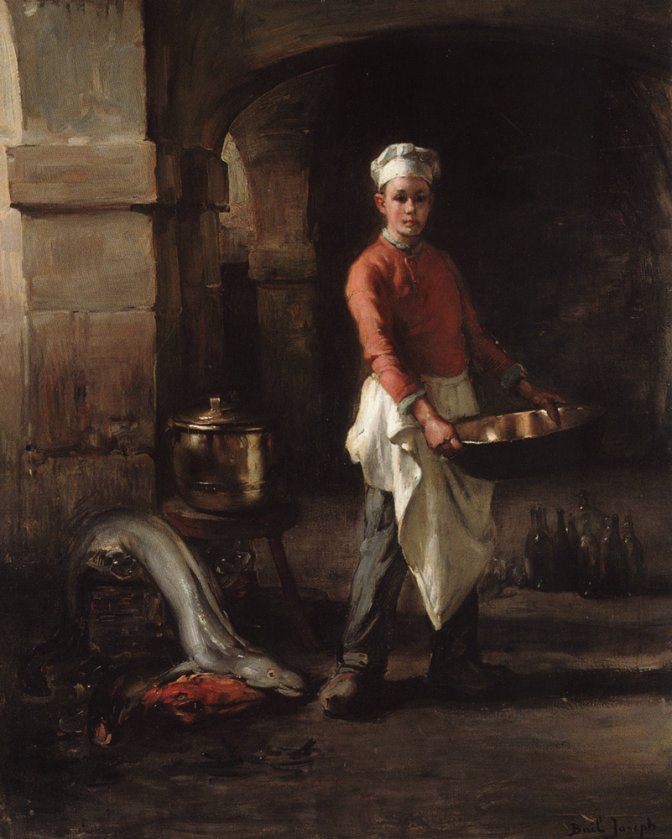
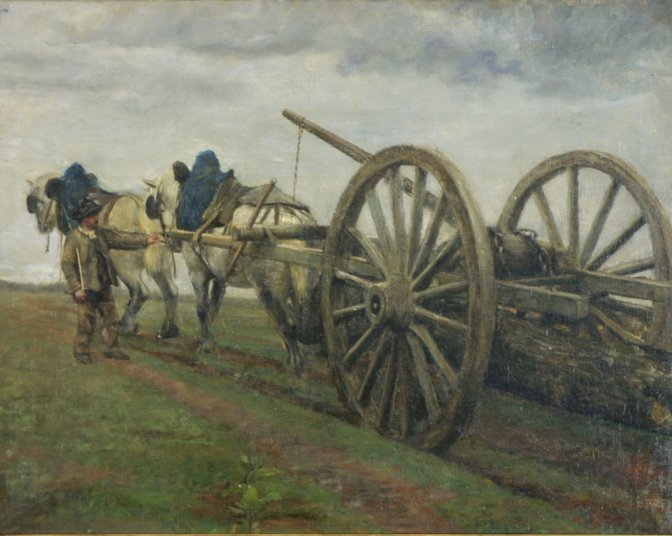
Several artists in Bois-le-Roi belong to this realist movement, among them the Bail family, from Lyon, who had settled in Bois-le-Roi in 1875. The father, An‐
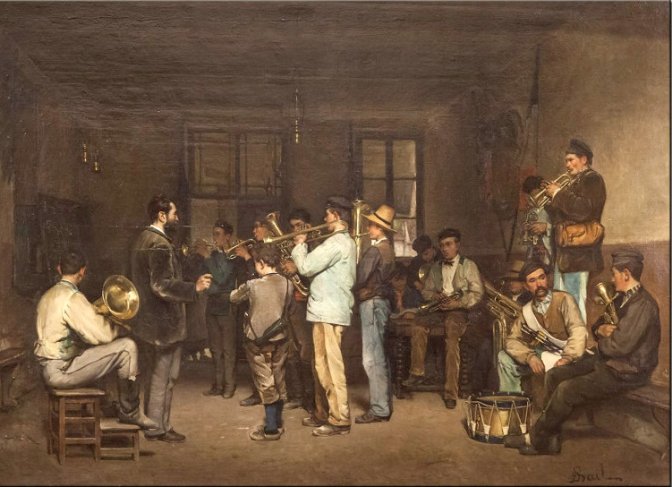
toine Jean Bail (1830-1927), made his name with intimist genre scenes of the rural life he could observe in Bois-le-Roi. En 1881, the city of Lyon bought La
Fanfare de Bois-le-Roi, created by Olivier Métra en 1879, shown rehearsing in a chiaroscuro room reminiscent of Dutch interiors.
In Bois-le-Roi literature was to the fore when Louis Létang (1855-1938), born in the village, became
Mayor from 1892 till 1908. He was a novelist and journalist, named editor in chief of the Nouvelliste
de Seine-et-Marne a publication in Melun. In his numerous popular novels he knew according to a
contemporary critic how to « … mix with an incomparable insight idealism and reality, and cast the
fanciful aspect of imagination in life’s picturesque colours… », they were published as series in vari‐
ous newspapers.
He was decorated with the Croix de Guerre for his military action in the First World War. As Mayor he
did much for Bois-le-Roi bringing electricity to the village, and became Officier de la Légion d’Honneur
in 1923. The painter Joseph Bail (1862-1921) made his portrait in 1890, now at the Mairie, and
Georges Moreau de Tours dedicated him his sketch of Henrich Heine, also at the Mairie of Bois-le-
Roi, drawn for the painting Henrich Heine et la Muse de la Poésie in 1894. Louis Létang had asked
the Bois-le-Roi artists to give one of their work to the Mairie, no doubt in emulation of Charles More‐
au-Vauthier (1857-1924), painter and author, who in 1907 created in Bourron-Marlotte, a village in the
Fontainebleau region Le Petit Musée de la Mairie, exhibiting works from the artists living there,
During the 19 the Dutch school of painting of the 17 century, The Golden Age of the Protestant
United Provinces of the Netherlands, influenced French artists. It carried on the realist tradition of
Flemish Primitive art, and found an echo with some Romantic painters, such as Delacroix. In this he
was influenced by John Constable, who himself emulated Dutch Masters. A return to nature was un‐
der way, facilitated by the arrival of the railway. The Barbizon School in the Fontainebleau Forest was
its first manifestation, preceding the Impressionists. The Second Empire bourgeois French society
appreciated the art of the Dutch Protestant 17 century bourgeois society which favoured landscapes, seascapes, still lives, genre scenes and portraits in‐
stead of the large Baroque historical or allegorical paintings of Catholic Flanders. These paintings are often on a small scale and the portraits are in bust as
in the Renaissance. They had already been appreciated by princely and aristocratic collectors in the past, and Louis XIV himself owned many of them in his
Cabinet de Peintures now in the Louvre Museum.
Several artists in Bois-le-Roi belong to this realist movement, among them the Bail family, from Lyon, who had settled in Bois-le-Roi in 1875. The father, An‐
toine Jean Bail (1830-1927), made his name with intimist genre scenes of the rural life he could observe in Bois-le-Roi. En 1881, the city of Lyon bought La
Fanfare de Bois-le-Roi, created by Olivier Métra en 1879, shown rehearsing in a chiaroscuro room reminiscent of Dutch interiors.
In Bois-le-Roi literature was to the fore when Louis Létang (1855-1938), born in the village, became
Mayor from 1892 till 1908. He was a novelist and journalist, named editor in chief of the Nouvelliste
de Seine-et-Marne a publication in Melun. In his numerous popular novels he knew according to a
contemporary critic how to « … mix with an incomparable insight idealism and reality, and cast the
fanciful aspect of imagination in life’s picturesque colours… », they were published as series in vari‐
ous newspapers.
He was decorated with the Croix de Guerre for his military action in the First World War. As Mayor he
did much for Bois-le-Roi bringing electricity to the village, and became Officier de la Légion d’Honneur
in 1923. The painter Joseph Bail (1862-1921) made his portrait in 1890, now at the Mairie, and
Georges Moreau de Tours dedicated him his sketch of Henrich Heine, also at the Mairie of Bois-le-
Roi, drawn for the painting Henrich Heine et la Muse de la Poésie in 1894. Louis Létang had asked
the Bois-le-Roi artists to give one of their work to the Mairie, no doubt in emulation of Charles More‐
au-Vauthier (1857-1924), painter and author, who in 1907 created in Bourron-Marlotte, a village in the
Fontainebleau region Le Petit Musée de la Mairie, exhibiting works from the artists living there,
During the 19 the Dutch school of painting of the 17 century, The Golden Age of the Protestant
United Provinces of the Netherlands, influenced French artists. It carried on the realist tradition of
Flemish Primitive art, and found an echo with some Romantic painters, such as Delacroix. In this he
was influenced by John Constable, who himself emulated Dutch Masters. A return to nature was un‐
der way, facilitated by the arrival of the railway. The Barbizon School in the Fontainebleau Forest was
its first manifestation, preceding the Impressionists. The Second Empire bourgeois French society
appreciated the art of the Dutch Protestant 17 century bourgeois society which favoured landscapes, seascapes, still lives, genre scenes and portraits in‐
stead of the large Baroque historical or allegorical paintings of Catholic Flanders. These paintings are often on a small scale and the portraits are in bust as
in the Renaissance. They had already been appreciated by princely and aristocratic collectors in the past, and Louis XIV himself owned many of them in his
Cabinet de Peintures now in the Louvre Museum.
Several artists in Bois-le-Roi belong to this realist movement, among them the Bail family, from Lyon, who had settled in Bois-le-Roi in 1875. The father, An‐
toine Jean Bail (1830-1927), made his name with intimist genre scenes of the rural life he could observe in Bois-le-Roi. En 1881, the city of Lyon bought La
Fanfare de Bois-le-Roi, created by Olivier Métra en 1879, shown rehearsing in a chiaroscuro room reminiscent of Dutch interiors.
In Bois-le-Roi literature was to the fore when Louis Létang (1855-1938), born in the village, became
Mayor from 1892 till 1908. He was a novelist and journalist, named editor in chief of the Nouvelliste
de Seine-et-Marne a publication in Melun. In his numerous popular novels he knew according to a
contemporary critic how to « … mix with an incomparable insight idealism and reality, and cast the
fanciful aspect of imagination in life’s picturesque colours… », they were published as series in vari‐
ous newspapers.
He was decorated with the Croix de Guerre for his military action in the First World War. As Mayor he
did much for Bois-le-Roi bringing electricity to the village, and became Officier de la Légion d’Honneur
in 1923. The painter Joseph Bail (1862-1921) made his portrait in 1890, now at the Mairie, and
Georges Moreau de Tours dedicated him his sketch of Henrich Heine, also at the Mairie of Bois-le-
Roi, drawn for the painting Henrich Heine et la Muse de la Poésie in 1894. Louis Létang had asked
the Bois-le-Roi artists to give one of their work to the Mairie, no doubt in emulation of Charles More‐
au-Vauthier (1857-1924), painter and author, who in 1907 created in Bourron-Marlotte, a village in the
Fontainebleau region Le Petit Musée de la Mairie, exhibiting works from the artists living there,
During the 19 the Dutch school of painting of the 17 century, The Golden Age of the Protestant
United Provinces of the Netherlands, influenced French artists. It carried on the realist tradition of
Flemish Primitive art, and found an echo with some Romantic painters, such as Delacroix. In this he
was influenced by John Constable, who himself emulated Dutch Masters. A return to nature was un‐
der way, facilitated by the arrival of the railway. The Barbizon School in the Fontainebleau Forest was
its first manifestation, preceding the Impressionists. The Second Empire bourgeois French society
appreciated the art of the Dutch Protestant 17 century bourgeois society which favoured landscapes, seascapes, still lives, genre scenes and portraits in‐
stead of the large Baroque historical or allegorical paintings of Catholic Flanders. These paintings are often on a small scale and the portraits are in bust as
in the Renaissance. They had already been appreciated by princely and aristocratic collectors in the past, and Louis XIV himself owned many of them in his
Cabinet de Peintures now in the Louvre Museum.
Several artists in Bois-le-Roi belong to this realist movement, among them the Bail family, from Lyon, who had settled in Bois-le-Roi in 1875. The father, An‐
toine Jean Bail (1830-1927), made his name with intimist genre scenes of the rural life he could observe in Bois-le-Roi. En 1881, the city of Lyon bought La
Fanfare de Bois-le-Roi, created by Olivier Métra en 1879, shown rehearsing in a chiaroscuro room reminiscent of Dutch interiors.
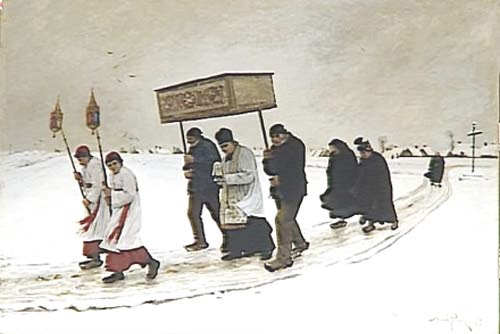
Alfred Roll (1846-1919) was a painter and sculptor who studied with Léon Bonnat at the École des Beaux-arts de Paris. In his art he summarized all the dif‐
ferent influences at work on 19 century French artists through the museums, the Parisian exhibitions and European travels facilitated by the railway. His
Romantic style in a naturalistic manner allowed him to make a very personal and original synthesis of the various current French artistic trends. It sums up
and illustrates the historical and eclectic spirit of 19 century official art, of which Roll became one of the main exponents under the IIIe République. As such
he received many official commissions from the State for monumental paintings and commemorative works, like the Célébration du Centenaire des Etats
Généraux 1889 exhibited at the 1893 Salon, and became Commandeur de la Légion d’Honneur. His painting L’inauguration du Pont Alexandre III on the 7
of October 1896, exhibited at the 1899 Salon, shows the influence of Manet and of the Impressionists. Yet it is imbued with all the splendour and opulence of
the end of the 19 century in this homage made to the Tzarine at the official reception, witnessed by the Tzar and the President Félix Faure, of a silver vase
filled with white flowers carried by a cortege of white-clad maidens. Roll went to Saint-Petersbourg after the Paris’s inauguration to make some preparatory
sketches of the Tzar and Tzarine. He travelled much all over Europe, in Holland, Belgium and Germany to visit museums, probably at the instigation of Léon
Bonnat, his master, who was also a collector.
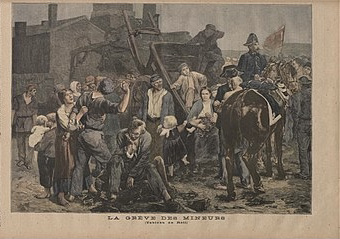
Roll was an unremitting worker, versatile and prolific who excelled in all genres; landscape, portrait or history paintings. But he also knew how to represent
the human moral and social sufferings engendered by the Industrial Revolution, as in the famous 1880 painting, La Grève de Mineurs. His enormous cre‐
ative energy was manifested at all levels of his talent. He loved animals and used to visit regularly the Ecole Vétérinaire de Maison-Alfort and the Ecole Mili‐
taire de Montrouge to study horses and riders. In 1905 he became President de la Société Nationale des Beaux-Arts, of which he had been one of the found‐
ing members in 1890 together with, among others, Rodin, Puvis de Chavannes and Aimé Perret, with the aim of organising a yearly exhibition. Alfred Sisley,
the English Impressionist painter settled in 1880 at Moret-sur-Loing, Seine et Marne, not far from Bois-le-Roi, congratulated him on this initiative.
Alfred Roll
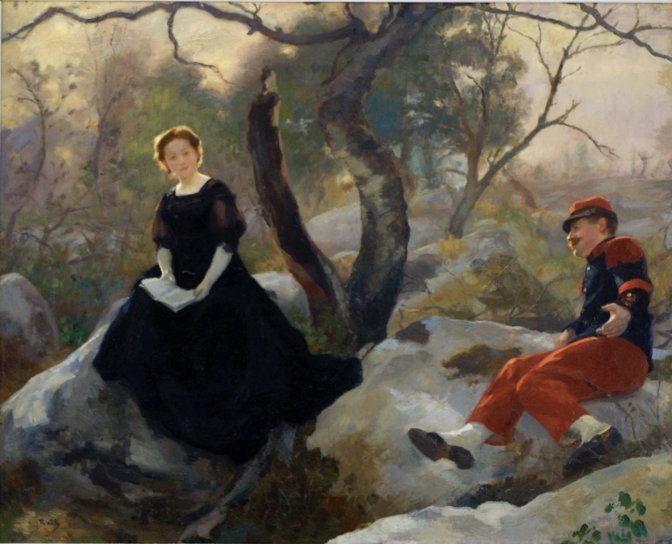
himself lived between Paris and Bois-le-Roi where in 1905 he bought a house at Brolles, in the avenue now bearing his name. In 1910 he presented a paint‐
ing to the commune in answer to the wish of the then Mayor, Louis Létang, to gather works from all the artists living in Bois-le-Roi. Roll reminded him of his
request in his letter of presentation of his painting Le Récit, and explained its composition set at Belle Croix in the Fontainebleau Forest, depicting his second
wife Henriette and his son Marcel.
All the painters who lived in Bois-le-Roi have a street to their names, Guido Sigriste (1864-1831), a
Swiss artist, is the only foreigner to enjoy this honour. He had studied in Naples, Munich and Paris at
the Académie Julian where he is registered in 1884 as the pupil of Gustave Boulanger (1824-1888) et
de Jules Lefebvre (1834-1912), Most of his output consists in historical and military scenes, in partic‐
ular those of the Napoleonic saga. Many of his paintings illustrated the Emperor’s battles, but also his
family life at the Malmaison, the Château of Fontainebleau or in Italy.
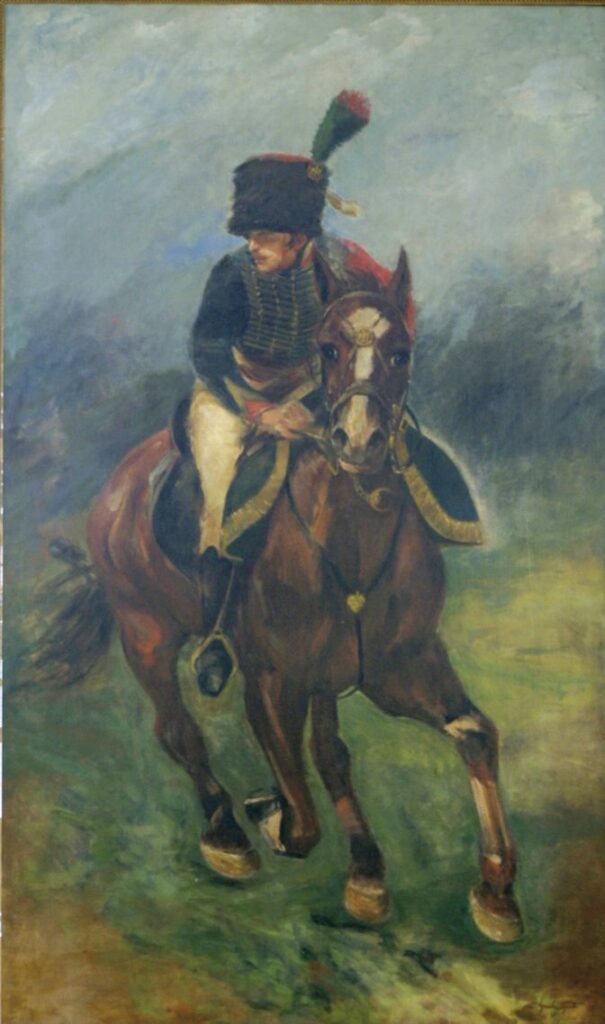
In 1932 his wife presented a
painting Guide de l’Escorte de l’ Empereur to the commune of Bois-le-Roi where the couple lived.
Sigistre was a patriot, and he was fascinated by feats of arms. During the First World War, despite his
age, he enrolled in the Légion Étrangère and died from his wounds in 1915. One less known aspect
of his work are some small-scale genre scenes in elegant interiors, gallant genre scenes and land‐
scapes in the manner of the 18 century Venetian masters Longhi and Guardi.
Sigriste was also fascinated by the art of photography and its capacity for capturing movement, in
particular the sequences of movements of a galloping horse, which he used in his paintings. Not find‐
ing the right camera to do so, he inventing one, the Jumelle Sigriste. He registered its patent in
Switzerland on November 17 , 1898, and presented it at the Société Française de Photographie in
1899. The Musée Lambinet in Versailles owns one of his paintings, Les cent marches de l’Orangerie
à Versailles.
The composer Olivier Métra ( 1830-1859) belonged to the Group of the Four Parisian friends invited
by Poupart d’Avyl at Bois-le-Roi in 1871. He came from a theatrical family and chose to study music,
winning a First Prize in Harmony at the Paris Conservatoire. In 1855 he conducted the Bal Mabille’s
orchestra and started composing the waltzes which brought him fame such as the the sung waltz, Les
Roses in 1863. It gave him access to all the most popular ballrooms of the capital, thus the ElyséeMontmartre, one of the most renowned dancing halls on the Butte Montmartre. In 1867 he was ap‐
pointed director of the Châtelet’s balls. Enrolled in 1871 during the Siege of Paris, he became drum‐
mer in the Garde Nationale, before arriving in Bois-le-Roi.
In 1872 he was director of the Folies Bergères, for which he composed the score of many ballets. From 1874 to 1876 he directed the Balls of the Théâtre de
la Monnaie in Brussels, and in 1877 he was appointed, together with Johann Strauss II, at the Opéra de Paris as conductor of the masked balls he also di‐
rected.
He was a prolific composer of waltzes, polkas, mazurkas and quadrilles. They were very popular and expressed all the gaiety and joie-de-vivre of the Belle Époque’s dazzling festivities as much in rural
settings as in grand society balls. He worked with many other composers on famous operettas, such as Madame Favart with Jacques Offenbach, and Les Cloches de Corneville with Jacques Planquet.
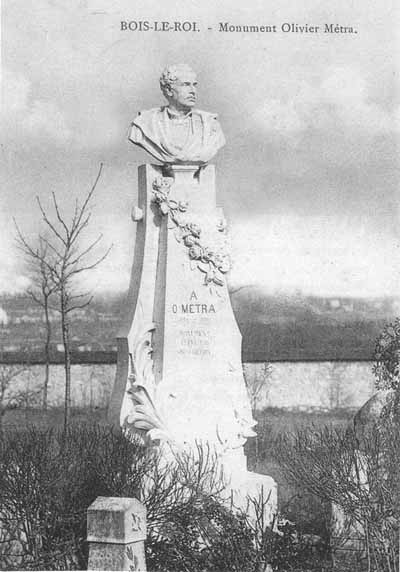
In 1879 he created the Bois-le-Roi’s bass band. He had his house built near his friend Poupart d’Avyl’s on the Seine bank, now named after him. A monument to his memory, decorated with a a
bust by the sculptor Antonin Mercié, marks his tomb in the Bois-le-Roi’s churchyard where the artists, architects, poets writers and actors who have lived there are also buried.
Georges Thill (1897-1984), the famous tenor, lived at Bois-le-Roi from 1929 to 1935 in the Villa Le Rocher in Brolles. He studied the bel canto in Naples with Fernando de Lucia and joined the Opéra
de Paris in 1924. His voice as a lyrical tenor made him famous all over the world. He sang in the greatest opera houses in Europe, the United States, South America, Australia, New Zealand, North‐
ern Africa and Egypt. He had a long career and a varied repertory, in Italian and German, but mostly in French. He became the greatest interpreter of the national repertory, which made him famous. It
was said that his voice was silver, while Caruso’s copper. His innate talents, a cello voice and his technical control gave poise and elegance to the clarity of the phrasing of his elocution and refined
coloratura.
Another musician, a composer of lesser stature than Olivier Metra, Jacques Roques (1852-1921), socalled Jacques d’Ondes, lived in Bois-le-Roi, probably invited by Georges Moreau de Tours as they
were neighbours in Paris, where the Roques family lived at 61 rue Claude Bernard, where his daughter Jeanne, so-called Musidora, was born. He composed musical scores for lieder on various poems some of them by Ronsard, Victor Hugo, Henrich Heine,or of his own. A volume of his works Souvenirs du Conservatoire, 1893, is held at the Bibliothèque Nationale de France :
gallica.bnf.fr
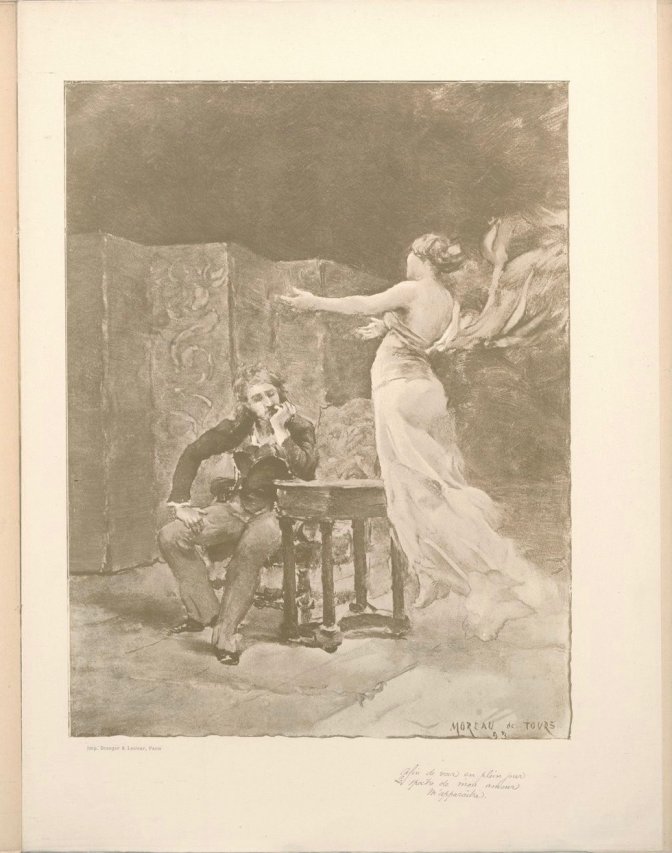
Georges Moreau de Tours illustrated the album, his design for Intermezzo, a vocal symphony on the translation of a poem by Henrich Heine, became the subject of a painting in 1894, Henrich Heine et la
Muse de la Poésie, the sketch of which he presented to Louis Létang, Mayor of Bois-le-Roi. The score is inscribed by the artist: ’Afin de voir en plein jour le spectre de mon amour m’apparaître’, So
that I can see in full daylight the ghost of my love appear to me, a moving homage to his beloved Thérèse, whom he married the same year after a long wait. She also appears on the score of Lison, a
lied composed on words by Jacques Blémont.
Jacques Roques’s daughter, Jeanne, (1889-1957), became a famous actress and director of silent movies under the name of Musidora, the name of Théophile Gautier’s heroin in his novel Fortunio.
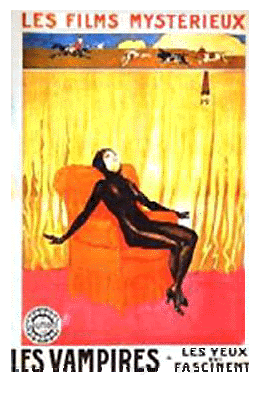
Louis Feuillade’s films in the series of Les Vampires and Judex, 1915-1916, brought her fame and she became one of the Surrealists’ muses. Her role as a femme fatale led to the creation of the word
vamp now used to define it. In 1912 she had played on the stage of the Bataclan café-theatre in Paris where she had met Colette, the novelist, who was then the lead dancer. They became friends and under her influence Musidora grew in her own career as an artist and a director. She adapted to the screen Colette’s novel L’Ingénue libertine, which became Minne in 1916, and Colette wrote for her an original script, La flamme cachée for one of her films in 1918. She encouraged Musidora to write her own scripts, which she did for Vicente in 1919. In 1917 Musidora had been the main actress of the film La Vagabonde adapted from Colette’s novel, who was present at the shooting. Their friendship lasted until Colette’s death in 1954, and the novelist used to visit Musidora in Bois-le-Roi.
Louis Feuillade had first noticed Musidora on the Folies Bergères’s stage in 1914 and led her to fame and success. André Breton used to send her roses, and the public idolized « the beautiful, seductive, unforgettable Musidora. » Louis
Feuillade had skilfully built up a very glamorous image to promote her, creating the star system used
nowadays by all film stars or other personalities keen to enjoy their moment of fame, be it only for fifteen minutes according to Andy Warhol. The design of the film posters also displayed a remarkable modernity. Musidora was at the zenith of her fame in 1926 when elected Queen of Cinema by the
Ville de Paris, she rode in glory a mare with a white harness on the Grands Boulevards, from the Place de la République to the Madeleine.
Musidora had many talents and under the influence of her mother, the artist and feminist activist, Adèle Porchez (1855-1928), she studied drawing and sculpture before choosing dancing and acting.
The Moreau de Tours family was close to Musidora’s own in Paris and Bois-le-Roi. Thérèse Moreau de Tours painted a portrait of Adèle Porchez, now in the archives of the Amis de Musidora in Boisle-Roi, the association publish regularly the Cahiers de Musidora : https://www.musidora.org
Theatre, cinema and music-hall performances were overtaking literature and the arts, yet music was
still to the fore at Bois-le-Roi. During the First World War, Maurice Chevalier had been enlisted in the
army and stationed in Melun. He used to visit Mistinguett on leave in Brolles at the Villa Fanfan she
had rented to be near him. Moreau de Tours’s two daughters were also musicians, and it seems that
Jacqueline had for some time used her husband’s stage name de la Cressonnière, when she signed
as witness to her brother’s wedding with Pauline Berthe Manteau in Paris on the 24 of November 1914. The Belle Époque’s splendour, and the happy-golucky and rebellious spirit of the end of the 19 century Bohème had all passed away. Bois-le-Roi now lived at the more frantic pace of the Années Folles,
with new protagonists heralding modern times. They came in their newly acquired motors to stay in the inns and hotels of the Fontainebleau Forest for so‐
journs just as romantic and libertine as at the time of the Affolantes.
The Hôtellerie de la Vignette owned by René Moreau de Tours and his brother-in-law, Charles Louis Lesot de la Panneterie, so-called de la Cressonnière, an actor on stage and in silent movies, was one of those new places of pleasure. Georges Moreau de Tours’s former studio was now a ballroom swinging to the
rhythm of the charleston and of the shimmy, the new dances brought over by the American soldiers replacing the waltzes and quadrilles of yesteryear. A new star had also arrived from America, Josephine Baker, who was setting the Tout-Paris afire dancing in the Revue Nègre in 1925. Matisse collected African
masks, inspiring his friend Picasso, who in his studio of the Bateau-Lavoir in Montmartre had elaborated Cubism in collaboration with Braque. A new generation of artists now gravitated to Montparnasse, the Brasserie La Coupole had replaced the Chat-Noir cabaret in Montmartre. It became the meeting place for American visitors, such as Ernest Hemingway, journalist for the Toronto Star, who discovered the pleasures of Paris in 1921.
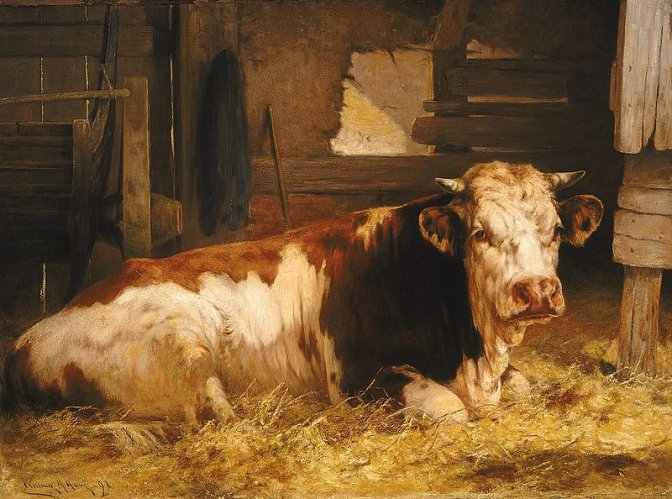
At the end of the 19 century some American artists, attracted by France’s artistic academic and realist reputation, had lived in Bois-le-Roi. William Henry Howe (1846-1929) from Ohio had studied in Düsseldorf and Paris. While in France he travelled to Normandy and to Holland, and became a painter of landscapes and animal life, famous for his realistic portraits of cows and sheep. He exhibited at the Salon from 1883 to 1893, where he was awarded a 3 Medal in 1888, and the Légion d’ Honneur in 1899. Howe was influenced by the 17 century Dutch Masters, but mostly by Constant Troyon (1810-1865), a French painter of animal life to whom he wrote an homage in John Van Dyke’s anthology Modern French Masters in 1896.
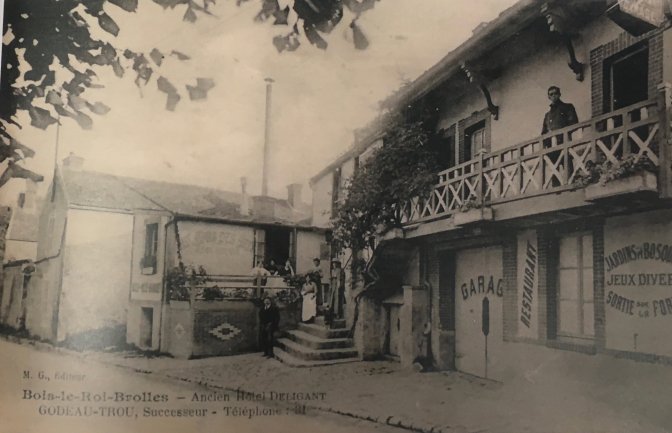
Howe studied also with Félix de Vuillefroy-Cassini (1841-1916), a painter and entomologist, who was close to the artists living in the Fontainebleau Forest villages. He was no doubt responsible for introducing him to the Barbizon artists and to Bois-le-Roi. In 1889 Howe stayed at l’Hôtel Deligant in Brolles, formerly called Au rendez-vous des artistes, to become later Hôtel de la Forêt, where he left two painted panels. In 1893 he went back to the United States, and settled in Bronxville, New York. From 1902 onwards he used to spend the summer at Old Lyme, Connecticut, in Florence Griswold’s guesthouse. Howe enjoyed great succes and fame during his lifetime. He regularly exhibited at the Salon des Artiste Français and was awarded a Gold Medal at the Paris Exposition Universelle in 1889, and was decorated with the Légion d’Honneur in 1899.
Edward Willis Redfield (1869-1965) was born in Bridgeville, Delaware, and as child already showed his talent for drawing. He studied painting at the Franklin Institute in Philadelphie, then with Henri Rolfe, and from 1887 to 1889 at the Pennsylvania Academy of the Fine Arts, where he became friend with Robert
Henri, also a painter. They travelled together in Europe to study in Paris at the Académie Julian, and in 1890 at the École des Beaux-Arts with WilliamAdolphe Bouguereau (1825-1905), an academic painter of genre scenes. Redfield wanted to become a portrait painter, but his stay in France changed his
mind. He discovered the Fontainebleau Forest and the Pein-Air School at Barbizon, and fell in love with the countryside, its wooded landscapes, and its
artists. In 1891 he stayed with Robert Henry at Brolles, at the Hotel Deligant, where like other fellow penniless artists, Howe among them, he left some panel
paintings in payment.
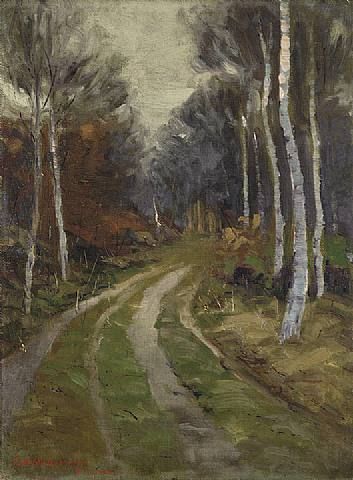
In 1891 he exhibited at the Salon des Artistes Français a snowscape, which became for him a recurring theme, L’hiver. Forêt de Fontainebleau. His way of
depicting nature was then very close to the style of the Plein-Air painters of the Barbizon School and he became a great admirer of the Impressionist painters
Claude Monet et Camille Pissarro with their new way of depicting the fleeting effects of weather and light.
In 1893 he got married in London to Élise Deligant, the innkeeper’s daughter now widowed. The couple lived in Pennsylvania where from 1898 onwards he became the leader of a group of Impressionist artists. The art critique Guy Pene Du Bois wrote in 1915 : ’The Pennsylvania School of Landscape Painters, whose leader is Edward W. Redfield, is our first truly national expression… It began under the influence of the technique of the French Impressionists. It has restricted itself patriotically to the painting of the typical American landscape.’ Redfield is best known for his snow landscapes from the New Hope area and his seascapes on the Maine coast, where he used to go on holiday every year.
His works are found in the collections of many museums, including the Metropolitan Museum of Art in New York and the Smithsonian American Art Museum in Washington.
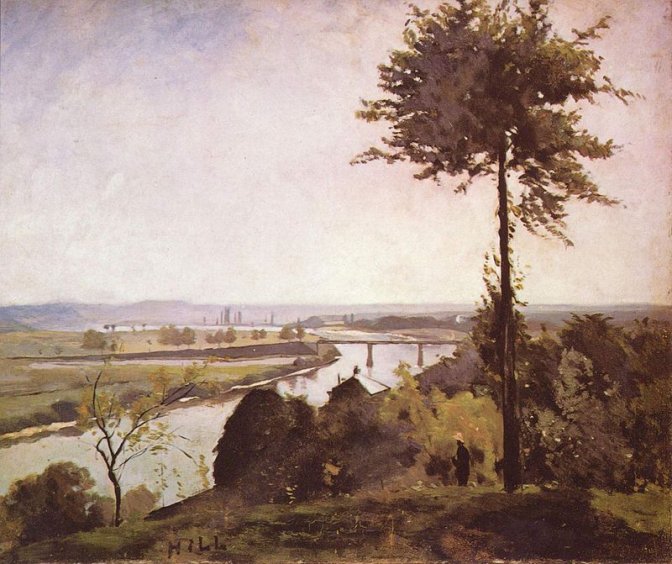
The Swedish painter Carl Fredrik Hill (1849- 1911) was born in Lund, in Scania. He studied art at the Fine Art School in Stockholm, and copied in the local museum the Dutch landscape painters Ruysdael and Hobbema, Claude le Lorrain’s classical landscape, Chardin’s realism and above all, Rembrandt, whose light effects he much admired for their capacity in evoking spiritual realms. The Swedish painter, Alfred Wahlberg, introduced him to Corot and the French Plein-Air School. He welcomed him at his arrival in Paris during the autumn in 1873, and together they toured the places where Corot and Daubigny had worked. He lived in Barbizon from 1874 till 1875 and painted the woodlands of the Fontainebleau Forest. He exhibited for the first and last time at the 1875 Salon, Dans les gorges d’Apremont. Forêt de Fontainebleau. While staying there he painted several views of the Seine at Bois-le-Roi and at Chartrettes, among them Vue de la Seine à Bois-le-Roi, sur le pont de Chartrettes c.1875, now in the National Museum of Stockholm. His seascapes and forest scenes in the Impressionist manner were exhibited at the 1875 Salon.
If he felt himself reaching to a new sense of accomplishment in his art while painting the Bois-le-Roi landscapes, when he seemed touched by grace in his Seine views or blossoming orchards in the Spring of 1877, Hill suffered from loneliness and his spirit darkened. He suffered from a psychotic delirium and in 1878 was interned in the Passy clinic of the famous alienist, Dr. Émile Blanche, where he stayed until 1880, when he went back to Sweden. He lived for thirty years in his family home in Lund where he produced some 3 000 drawings, most of them preserved in the Malmö Art Museum together with 23 paintings.
These imaginary fantasies realized in pencil, ink or watercolours, are the expression of the tormented soul of a visionary artist who created in pain and not in joy, locked in his inner delirium.
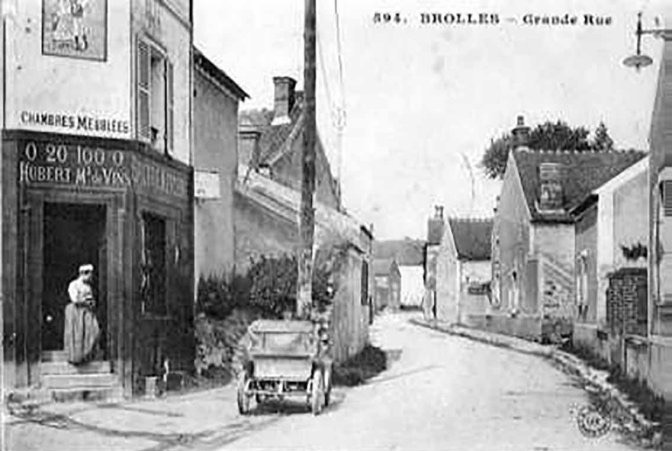
There were several inns and hotels in Brolles. The grocery inn of Mme Le Bœuf was home to the writer Anatole France (1844-1924) and his family when he was writing his novel Le Crime de Sylvestre Bonnard in 1883. He described it as such : ’Brolles ! My house is the last one in the village street leading to the forest. It is a gabled house and under the rays of the sun its slate roof shines like a pigeon throat. Kuroda Seiki (1866-1924) is a Japanese painter born in Kagoshima on the Kyushu island, in an ancient Samurai family. His origins destined him to a political or diplomatic career, and he studied French and English in Tokyo. In 1884 he went to Paris to study law, but he soon opted for painting under the influence of two Japanese painters living in the French capital, Masazo Fuji and Yamamoto. In 1886 he entered the studio of Louis-Joseph-Raphaël Collin, (1850-1916), an academic genre painter. His stay in Paris lasted ten years during which he discovered Plein-Art painting. In 1890 he joined in a colony of European and American artistes in the village of Grez-sur-Loing, near Fontainebleau. Once there he was inspired by the beauty of nature and of his favourite model, Marie
Billault. He was the first Japanese artist to settle there, and he invited his friends fellow painters to join him.
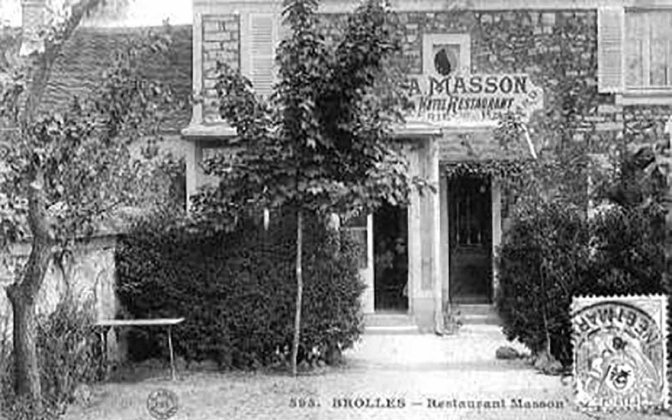
He stayed at the inn, Auberge Masson, Restaurant des Familles in Brolles, before returning to Paris in 1893. His painting Toilette du matin was exhibited at
the Salon and the same year in Tokyo, it was the first painting of a nude to be exhibited in Japan.
Back in Tokyo, he then settled in Kyoto where he became the leader of an Impressionist school of painters, handing over to Japanese painters the tradition
of Western Plein-Air painting. His teaching role was reinforced in 1896 when he was appointed Director of a Western art department in what is now the Arts
University of Tokyo. In 1928 the Kuroda Memorial Hall was built under the aegis of the National Museum of Tokyo with the help of the bequest of the artist’s
personal fortune, with the aim “to finance projects for the promotion of art”.
https://www.tobunken.go.jp/kuroda/index_e.html
Seiki Kuroda was decorated with the Grande Croix de la Légion d’Honneur, and the Order of the Rising Sun.
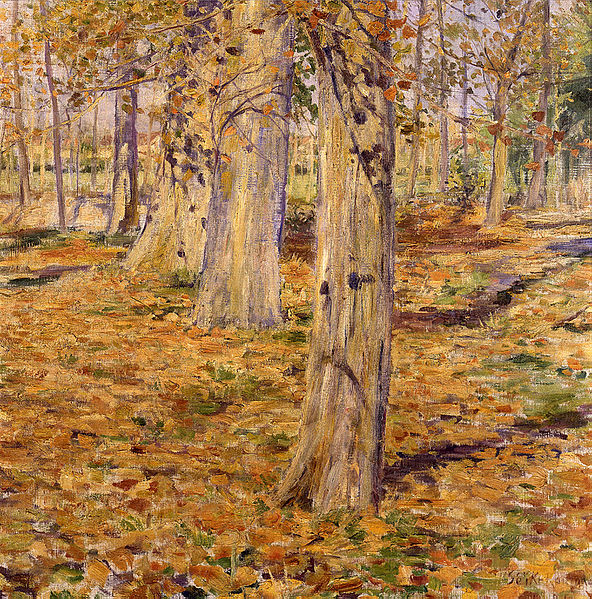
His painting Feuilles mortes in 1891, in the Kuroda Memorial Hall, National Museum of Tokyo, evokes all the natural beauty and poetry of the Fontainebleau
Forest, a place which has attracted and inspired so many artists from so many different parts of the world, which they celebrated and made known through
their work in their own country.
© Copyright 2025 Monique Riccardi-Cubitt
Webmaster : Toussain Marthoud Président de l’agence Transparence Digitale